Maya Angelou

Of all the things I remember about the time I met Maya Angelou, I don’t quite remember how we ended up shopping in Shreveport, Louisiana the day after she visited my college.  As college friends post memories on my Facebook page of her visit, I have been trying all day to remember exactly how we ended up shopping and how she came to buy me this scarf.

photo-77

I do remember that the process, the work of bringing her to campus taught me everything I needed to know about political maneuverings, regional pride, and, eventually, what is possible when an entire institution decides to do a thing right.

I got it into my head one summer that I should bring her to my small, private, mostly lily white, college in Northwest Louisiana. I’d read I Know Why the Caged Bird Sings in middle school in Biloxi, Mississippi when my father was stationed at Keesler Air Force Base.  The sexual violence alarmed me, but I remember deciding not to tell my mother about it for fear she’d want me not to read anymore. And I very much wanted to finish it and read what came next.  I didn’t really think of her again until I saw her in an interview with Bill Moyers.

It was the summer before my junior year.

Beyond all the uplifting rhetoric of her poems that informs how I hope to move through the world, the interview introduced me to her poem “The Mask” and the line “They say, but sugar, it was our submission that made your world go round” sounded like a call, felt like a directive to my 20-year old self. I wasn’t raised in the tradition of thinking of “the ancestors” or being beholden to anyone but God and my parents, but three years in Louisiana, at a campus that celebrated the War Between the States every year and had an all white choir because black voices “didn’t blend” left me open to what I heard in that poem. It animated the struggle and my obligation to those who waged it, and I thought the first step was to bring Maya Angelou to my school.

It never occurred to me that my peers would say no, that the Student Government Association that I’d criticized regularly when I was editor-in-chief of the campus paper would balk at spending what, at the time, seemed an incredible amount of money to bring a speaker to campus.  Especially a Black woman.  When I was a student at Centenary, the college’s flagship organization the Centenary Choir was still all white, and I remember marching out of a scholarship luncheon in protest when they started playing Dixie.  We referred to the impoverished neighborhood directly behind the opulent First Methodist Church as “The Bottoms” with no irony or sense of awareness.

As an Air Force brat I was, on one level, different—definitely not Southern—and, with a Surinamese mother, not even entirely American.  I was used to cordoning off my life (living one way “off base” and another way beyond the gates), so despite the college’s small size, I found a safe community in the English department with a close-knit group of professors who were teachers, mentors, critics, and cheerleaders all at the same time.  They thought it was a fine idea to bring Angelou to campus, but the SGA controlled the budget I needed as chair of the Forums Committee, and I needed to get their vote to spend it.

It didn’t go so well.

I made all the wrong arguments for that particular group.  I talked about the fact that she was an amazing writer and a Civil Rights icon.  They didn’t care.  I demanded a celebration of a woman of color at a school that still celebrated Old South day at the KA house.  They wouldn’t budge.  I spoke with people individually and tried to charm them. I wasn’t that charming.  In the end, I prepared a brief handout for a formal presentation at a meeting and showed them the video of her interview I’d asked my mother to record. What finally turned the tide was one SGA member realizing that Angelou claimed Arkansas as home. It was where she was from too, so she changed her mind. Place trumped race, the fee, and my personal failings as a lobbyist.

It turned out to be such an event that it ended up all the way in The New York Times .  I’d love to take credit for all of it, but I don’t remember things. I don’t remember how the members of the Centenary Women’s Quorum got it into their heads to buy copies of the novel for everyone on campus.  And I don’t remember who invited the Shreveport campus of the HBCU Southern University to my 94% white college to attend the reading.

I do remember going to Brown Chapel and counting the seats in each pew with my own bottom so I could get an accurate count of how many people would fit (800).  I remember standing in that same chapel by myself imagining introducing her to the community, wondering if anyone would actually show up. I also remember the director of the Meadows Museum offering to distribute the tickets and both of us being caught unaware when all 800 were gone almost as soon as the museum opened.

On the day of her visit, I started my period unexpectedly and had to change clothes, so instead of wearing my carefully planned outfit I was in a borrowed, ill-fitting skirt and a boring blouse.  I looked as if I hadn’t taken the time to prepare for her, but that wasn’t true.  I was mortified (and she looked concerned), but that evening I showed up looking like a raised right black girl, and she was pleased.

Her height meant she needed a large car, and a member of the Board of Trustees owned a funeral parlor.  He sent us a limousine with a driver for the day, and a bunch of us piled in the car and went and had a visit with her over drinks.  While there she asked me not to read the speech I had written, and I panicked a bit.  Mostly I was worried about the people I had to thank.  She urged me to thank who I needed to thank but then to just speak about what it was like for us to be together.  I forgot my bad outfit, my friends, and the 800 people who would be there.  And we just talked.

I’m trying to remember the speech.  I can’t really recall it.

The mayor was there that night, and so was my mother.  I wore a black skirt and a black blouse with a jewel neck. I wrapped a large beige sash around my waist and pulled my hair back into a bun.  We took a picture with the SGA president, and we all look pretty awful.

I missed the reception after, but she was there and when the roses showed up her assistant had been at her side long enough to know they came with thorns.  She was tired and getting ready to leave and she almost left without me, but I got into the car at the last minute and nestled up against her saying, “you read my favorite poem!” She replied, “I love it when I read someone else’s poem.”  I will never forget her voice or the fact that she called the house and told me she liked my father’s voice (he’s a tenor, and it’s lovely).

She didn’t actually need a limousine—just a big car.  My parents owned something we lovingly called The Queen Mary, so I used it to pick her up the next day.  My mother remembers that she wanted to get her hair done. I said something about looking for a barrette.  She thought I was mispronouncing beret.  And so we shopped.  And not just at one store.  We went to the Pier One on King’s Highway and then drove across town to the Dillard’s.  I rambled on and on, and she was kind and patient.   It struck me as only a little surreal to have this private time with her and her assistant. She asked about my family. I asked a million questions.

When we were leaving Dillard’s it started to rain.  We made it to the car just in time, but I looked back and saw an older black woman standing under the awning.  I ran back to walk her to her car.  I didn’t think about and wouldn’t remember all these years later, but when I got back to the car Dr. Angelou said, “You’ve moved me today” and gave me the scarf I assumed she’d bought for herself.

I never thought she would die.  I know that’s silly.  I guess I thought she’d live to be at least 100, at least.  And I’m surprised at the depth of my sadness.  It’s not as if she was an everyday presence in my imagination.  She’s not, say Lucille Clifton, or Alice Walker’s Meridian.  But at 10:20, ten minutes before my class was to begin, I saw the news and cried immediately.

There’s something about losing the great figures from those early years when you still believed that anything was possible and when your confidence was not dampened by experience and the cynicism it brings.

I remember one part of my introductory speech, I remember repeating “She just is.  She just is. Just is.”

And I remember standing in the amphitheater at my College, at a poetry reading and saying proudly:

Bringing the gifts my ancestors gave,
I am the dream and the hope of the slave

I rise
I rise
I rise.
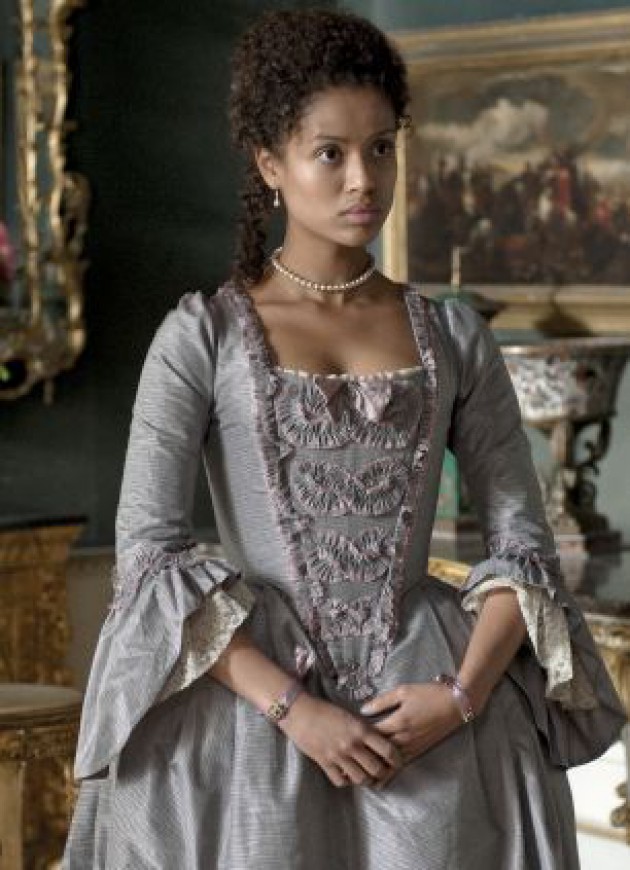
 

“Belle” in Context

If you’re like me, and you’ve spent the last 15 years or so reading and writing about nineteenth-century British literature, the release of “Belle” does more than just provide a moment of personal joy. The cinematic rendering of a real figure from the 1800s represents a moment when the ivory (ahem) tower and popular culture intersect to produce a film that, even with its flaws, is set to change the way we read, understand, and, more importantly, imagine the period. I didn’t choose to study nineteenth-century British literature and culture in order to think about race and representation, but my work to understand the ideologies behind and underneath canon formation led me there, and in my book project that thinks about how women’s bodies function as the site for ideological debates, black women’s bodies have popped up so often that I decided they needed their own chapter—right there between a chapter about Jane Austen’s courtship novels and a chapter on Mary Shelley’s indictment of imperialism. In other words, I’ve been thinking and writing about all of those invisible Belles that do not yet have their own narratives. And, as someone who brings pop culture into her classes so often that terms like “highbrow” and “lowbrow” are practically useless, I’ve been particularly curious about why we had Zombie Austen before we had Black Austen.

BelleWhile “Belle” has not marketed itself as an Austen adaptation (Amma Asante describes it as a “Jane Austen-style period romance”), the film brings to mind Rozema’s 1999 adaptation of Mansfield Park. Asante’s film tells the story of a young woman who could easily have been Fanny Price’s doppelgänger. Dido Belle Lindsay is a young woman with ties to the wealthy and the landed and, like all of Austen’s heroines, is wending her way through the marriage market towards a suitable and companionate marriage. She’s beautiful, charming, and feisty. She’s also black or, more specifically, bi-racial—the daughter of a slave and a navy admiral, and in the film her very presence in the household of the Earl of Mansfield is the spark behind his ruling on the Zong Massacre. What this means is that in addition to selecting the right mate, she has to do so while walking a tightrope of race and gender and the respectability politics that prompted Kelli Goff (bless her heart) to forget that this is still at it’s heart a film that holds up white supremacy and patriarchy, even at the very end.

In the trailer for the film, we see the young Belle transported from a port town to a large estate in much the same way that Fanny Price is transported from Portsmouth (a slave port) to an English estate that relies on the products of the slave trade. Belle faces a stern benefactor, but Harold Pinter, who portrays Sir Thomas Bertram, the patriarch of Rozema’s “Mansfield Park,” has been replaced with Tom Wilkinson, who Austen fans might recognize from his turn as a dying Mr. Dashwood at the beginning of Ang Lee’s “Sense and Sensibility.” The questions that Austen’s heroine Fanny faces about her place in the family (somewhere between servant and sister) are here in the film. Belle, like Fanny, has to choose between two men—a moral man with virtually no social or economic capital and a man whose view of her is, let’s just say, problematic.

This is not to suggest that “Belle” is simply a remake of Rozema’s adaptation or Austen’s novel. Misan Sagay’s screenplay is its own beautifully crafted narrative and Asante’s direction shows the kind of restraint necessary for a story that could so easily slip into the sentimental and overwrought. Seeing this movie was like watching an essay in moving images. More than considering it an Austen adaptation and/or a period film that paints by the numbers, I see it as a true palimpsest that reminds us of the Austen we know while inviting us to understand what she only hints at in her novels. It presents relationships between women of color and white women that are both tense and affectionate. It draws explicit connections between the marriage market and the slave trade, something Mary Wollstonecraft does in A Vindication of the Rights of Woman. It offers a lesson in how inheritance laws trapped both women and men. It shows the limits of sentimental progressive politics. And it does so by placing the fate of a woman of color at the center of its narrative to reveal the limits of picture perfect perfection.

We’ve seen alternative narratives that shift the focus from white main characters to a person of color (Jean Rhys’ Wide Sargosso Sea, the prequel to Brontë’s Jane Eyre, and its multiple film adaptations come immediately to mind), but Austen’s world has remained white in the public imagination, even though, in Emma and Persuasion, the issue of the slave trade is not entirely invisible. When we do encounter people of color in Austen’s world they are in contemporary adaptations. The most popular are Amy Heckerling’s almost flawless “Clueless,” set in a modern high with a multi-racial student body, and Gurinder Chada’s much less successful Bollywood Adaptation “Bride and Prejudice” (full disclosure: In the bottom of some filing cabinet sits my own attempt at a modern adaptation of Austen I co-wrote while driving across the country one summer. It’s called “Emma Jones.” Everyone in it is black. It’s not very good. Let’s leave it at that). To even introduce race and slavery into Austen is such a tricky prospect that Rozema had to prepare audiences for her Mansfield Park by making explicit that her intention was interpretation not fidelity.

Those who defended her film from critiques and rants of Austen purists did so from a place of well-intentioned but historically inaccurate indulgence, accepting that Rozema is projecting late twentieth-century politics back onto the nineteenth. But an adaptation likes “Belle” makes clear that what we now know allows us to re-imagine a world that Austen would have known but that would not fit into the courtship rituals she always satirized and sometimes endorsed. The specter of a racialized body in Austen’s world of manners would change the social alchemy of her novels. If her goal was to satirize courtship rituals, slavery didn’t lend itself to a lady’s humor or wit. It’s worth remembering, however, that British white women wrote about slavery and abolition during Austen’s time. In fact, depicting the horrors that slavery visited upon women and children in particular became rather fashionable among women writers of the time. They weren’t poking fun at its practitioners and defenders; instead they either went towards the completely sentimental (see Hannah More) or the pragmatic (see the interracial marriage in the first edition of Maria Edgeworth’s Belinda). We can count Mansfield Park as Austen’s contribution to that conversation and “Belle” might well complete it. As I often remind my students, Austen chose to make explicit what makes life at Mansfield Park possible.

Of course, people of color have been present in British prose from at least as early as the seventeenth century, but on college syllabi and in the public imagination they are far and few between: Othello (1604), Oroonoko (1688), Equiano (1797), and Miss Swartz in Vanity Fair (1848). In the twenty years since Edward Said’s focus on the “dead silence” in his post-colonial manifesto Culture and Imperialism  scholars and other storytellers are paying more attention to the presence of people in color in historical British narratives. In his new edition of the 1808 novel The Woman of Colour: A Tale Lyndon Dominique lists 50 long prose fiction and plays from 1605 to 1861 that include characters of color, roughly half of which were published during Austen’s time. We have been seeing new editions of some of those stories at a steady pace. The 1994 edition of Maria Edgeworth’s Belinda shows a black servant on the cover. Edited by Katherine Kirkpatrick for Oxford University Press, it presents the original novel with the interracial marriage of Juba an African servant and Lucy an English farm girl (Edgeworth was pressured to remove the marriage). In 1999, the same year of Rozema’s “Mansfield Park,” Oxford University Press released a new edition of Adeline Mowbray a novel published in 1804 which features a West Indian woman and her son as saviors and companions to the title character. In 2002, just before I finished my doctorate, the Broadview edition of Wuthering Heights issued. I was planning my history of the British novel class and when arrived it had a Moor on the cover; not the desolate landscape of my well-annotated Norton edition but an actual Moor and I remember writing a colleague: “When did we go from Laurence Olivier to Laurence Fishburn?” The cover of the 2008 edition of The Woman of Colour: A Tale (1808) is a detail from a painting in the collection of the Earl of Mansfield. The painting is titled “Dido Elizabeth Belle and Lady Elizabeth Murray”—the two young women in Asante’s adaption. In the novel, “Dido” is the name of the heroine’s black servant.

Austen adaptations have remained in a liminal space similar to the one Fanny occupies when she can’t return to the squalor of her home in Portsmouth but can no longer remain at Mansfield Park if it means adhering to her uncle’s wishes. They have stayed somewhere between the all-white period adaptations and the modern multi-racial ones—more Gwyneth than Lupita. But “Belle” marks an important change. It makes clear that while it’s certainly possible to go on pretending there were no black people, at least in the background, of Austen’s world it’s no longer interesting or even a nuanced representation of the time. The “dead silence” of Mansfield Park is filled with questions, speeches and declarations, and if you know the history of the abolitionist movement in England you know that beyond happily ever after, Belle’s presence represents concrete social change that echoes in a twenty-first century Britain that is paying more and more attention to its history of slavery. Much of this national self-reflection has been prompted by the fact that 2007 gave England a chance to think about the abolition of the slave trade. In 2006, The Church of England apologized for benefitting from the slave trade. The International Museum of Slavery opened in Liverpool in 2007. In 2013, The Independent reported the results of a study that showed in stark terms how much slaveowners were paid during and after the abolition of slavery. The arrival of the first black Marchioness in 2013 prompted a series of articles making clear that the peerage has a multi-racial legacy.

The storytellers are either catching up or leading the way. Despite Heathcliff being described as a “‘dark-skinned gypsy in aspect and a little lascar” he had always been cast as white in film versions of the novel until 2011 when he was portrayed by the black British actor James Howson. Then there’s Longbourn by Jo Baker . It turns its attention to the servants who make the lives of the gentry in Pride and Prejudice possible. In this representation of those beneath the stairs, Baker introduces the kinds of characters we might meet in “Belle,” and her portrait of those figures is compelling and clearly informed by a post-abolitionist reading of Austen and her world. To present social change as the work of a young woman of color, to have the body of a British woman of color as the fulcrum for legal pronouncements nudges us to reconsider race and gender in the nineteenth century and perhaps even in our own. I mean that literally. The first black marchioness who caused a bit of a stir last year? Her first name is Emma.